
How to scale your cold outbound
I often hear, "We're sending cold emails left, right and center, but getting very few replies. How to this channel work?" Here's a starter pack to spice up your outbound game and get those replies.

Have you ever tried cold outbound? It's like trying to start a conversation with a stranger at a bar - you have no idea if they're interested, they might be in a bad mood, and they might even throw a drink in your face. Except with cold outbound, you don't even get a drink.

But seriously, cold outbound can be tough. You're reaching out to people who have no idea who you are, what you do, or why they should care. It's like trying to sell a sandwich to someone who's already full - you've got to make it sound really, really delicious.
There's nothing like spending hours crafting the perfect email, only to hit 'send' and hear nothing but void in response. You start to wonder if maybe your email account has been blacklisted by the entire internet. Maybe you accidentally offended an email server and now you're banned for life 🤔
And then there's the dreaded follow-up email. You don't want to be a pest, but you also don't want to miss out on a potential sale. It's a delicate balance that's harder to navigate than Bangalore traffic.
But despite the challenges, cold outbound can be a really effective way to generate leads and close deals. Every salesperson, marketer, and business owner has faced the cold outbound struggle at some point. It's like a rite of passage or something. That's why I'm here to share some tips and tricks for mastering the art of cold outbounds at scale.
And if all else fails, just remember: at least you're not the person who tried to sell me a vacuum cleaner while I was trying to eat a sandwich in a nice cafe. Now THAT's cold outreach gone wrong.
A successful cold outbound campaign is a factor of three key elements: a well-defined ICP (ideal customer profile), strategic (cool) automation, and compelling content.
First things first, don't waste time on unqualified leads. Use data and analytics to target your ideal customer.
Next, automate your outreach. There are tons of tools out there that can help you send personalised messages to hundreds or even thousands of people at once. It's like having a virtual army of salespeople.
But don't forget to keep it personal. Use merge tags and dynamic content to make each message feel like it was written just for them. Sharper the personalisation and triggers, better the outcomes. It's like magic, but with words.
And finally, track your results and adjust your strategy as needed. Don't be afraid to experiment and try new things.
Identifying ICP and setting up data
When identifying your ICP (ideal customer profile), start with the basics: demographics, industry, job title, company size. Then dig deeper into psychographics, like pain points, goals, and values.
It's like building a composite sketch of your ideal customer or anyone whose attention you want to grab. It could be prospective investor, employer or partners. Your ideal customers today might be solving the problem with an alternate legacy product or completely unaware of the problem.
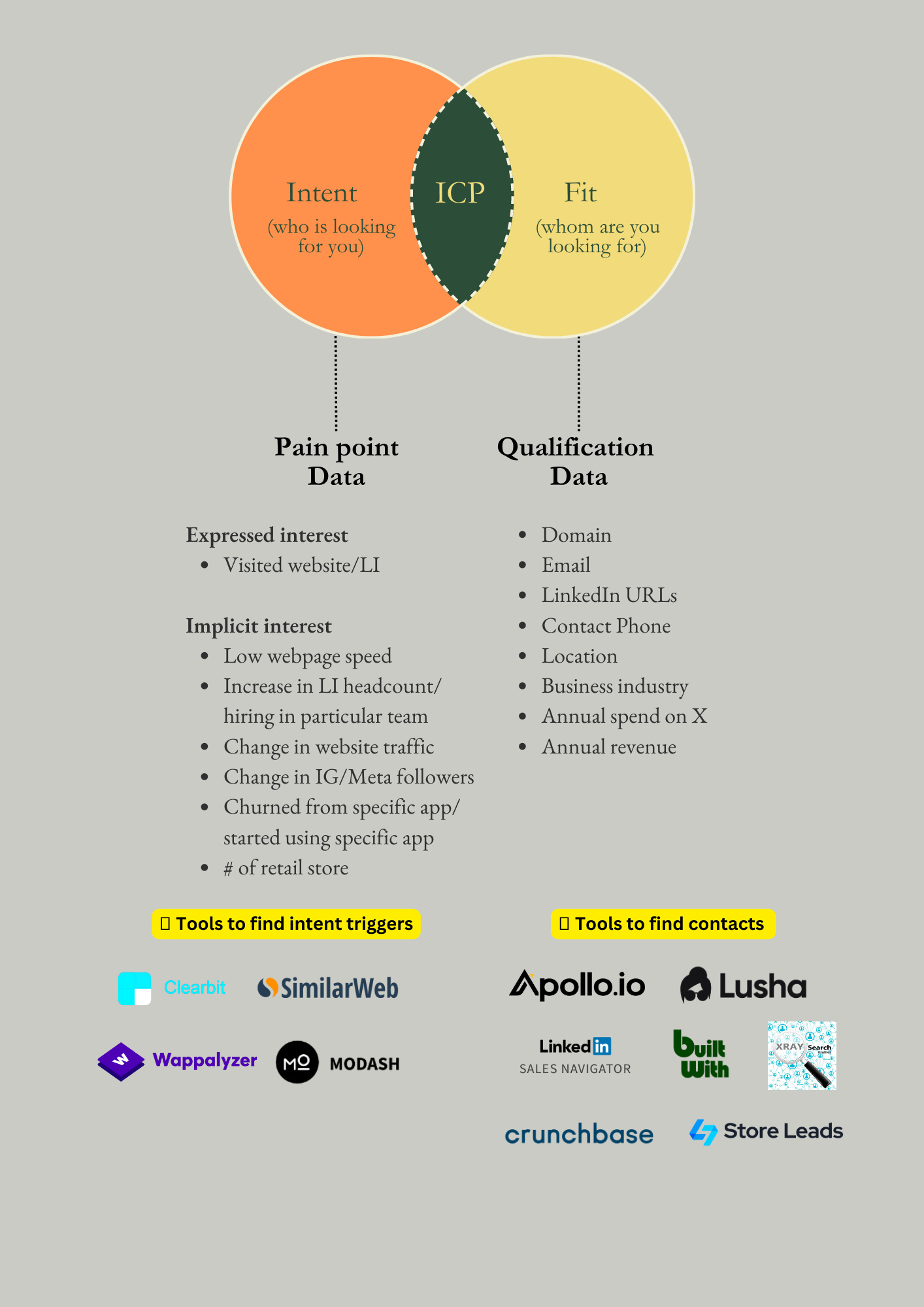
Best way to identify your ICP is to look at your existing customer base. Who are your most profitable and satisfied customers? What traits do they have in common? It's like reverse-engineering your ideal customer
Sometimes your ideal customer profile can be found in unexpected places. Let's say you run a company that sells high-end artisanal hot sauce. You might think your ICP is someone who loves spicy food, enjoys cooking, and values quality ingredients. But through customer feedback and market research, you discover that your hot sauce is also popular among craft beer enthusiasts. They love pairing it with different types of beer and experimenting with new flavor combinations.
Don't forget about negative personas too - the types of people or companies you don't want to target. Knowing who to avoid can be just as important as knowing who to target.
Once you have a clear picture of your ICP, use this information to plan enrichment of ICP attributes to enable targeted messaging. To speak their language, address their pain points, and offer targeted solutions to their problems - you will need data that can help you to create more personalised and effective messaging.
Enrich your ICP data
First you need to devise a data enrichment plan for your prospective customers. Of-course the ICP attributes and parameters has to be customised for your business and industry.
First up: warm outbound. Instead of reaching out to completely cold leads, focus on those who have shown some level of interest in you. This could be through social media engagement, attending webinars, or signing up for a newsletter. Prepare list of this universe and then find cold leads. Apollo, Lusha, LinkedIn, Xray Search (sales navigator alternate) and yellow pages’ scrapers (eg. crunchbase, marketplaces, builtwith for website tech, Storeleads for ecommerce)
Automations
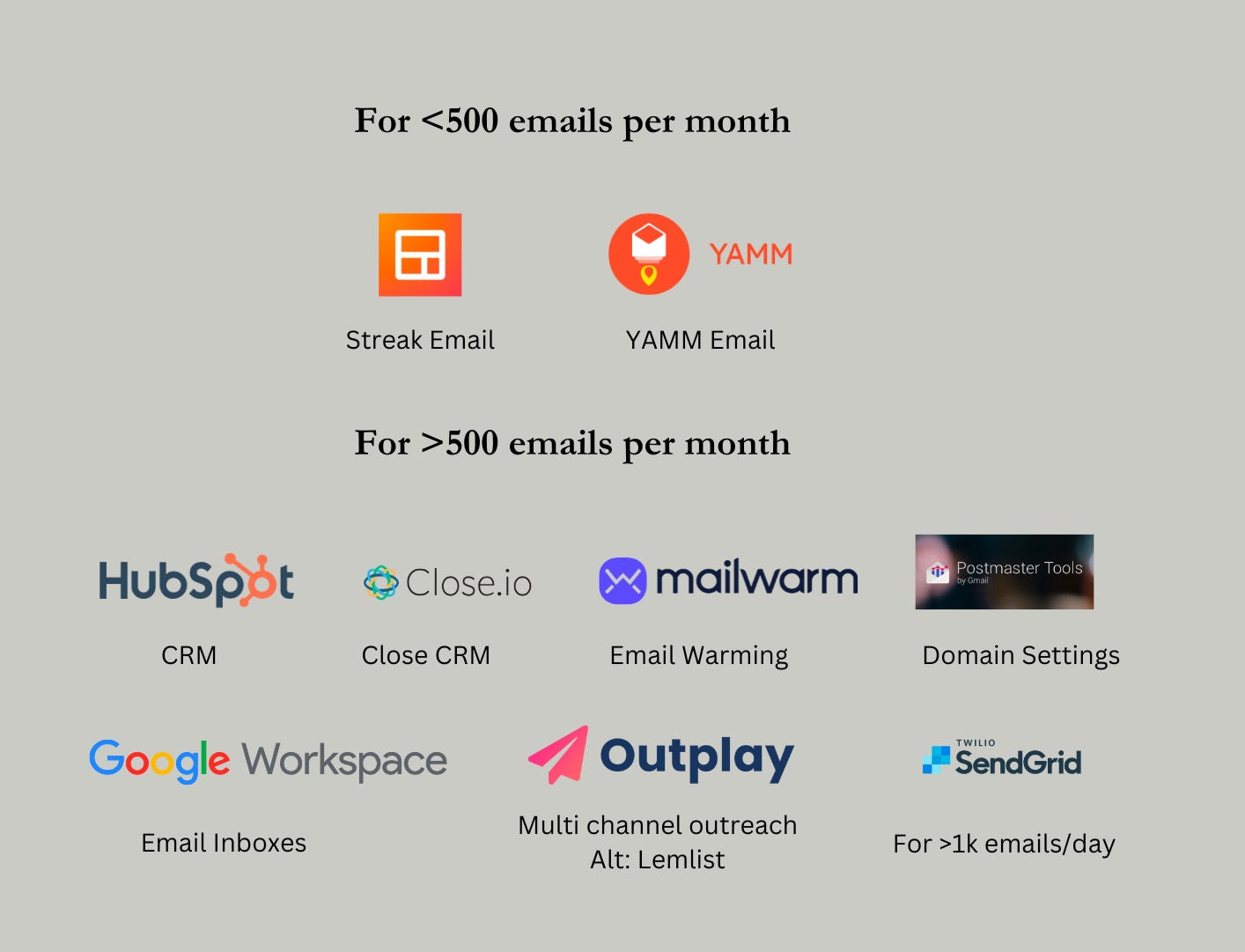
Based on email volume you should invest into your automations. Setting up a CRM for job search campaign is over-optimization IMO. Based on your scale, you will require different set of email box, domains and customer data platform. For smaller campaigns with a monthly volume of under 500 emails, tools like Streak or YAMM may be sufficient to simplify your outreach efforts.
If your email volume exceeds 500 emails per month, you'll need to explore more sophisticated automation tools to leverage the advantages of automation. CRM and Multi-channel outreach tool are must-haves to scale your outbound more than 500 emails per month.
If you plan on sending more than 1000 emails in 24 hours, your email server may halt your outbound emails from sending. Its recommended that you set up a 3rd party email service like Mailgun/SendGrid for sending larger quantities of email. This limit may be lower depending on your Email Service Provider.
Tools to automate your email outbound
Compelling Content
Everyone’s got that extra notification, tweet to reply and IG reel to watch. How do you make sure that your cold emails stand out from the rest? The answer lies in creating compelling content that captures your recipient's attention and keeps them engaged.
Here is content hygiene I’d recommend for compelling cold emails:
Keep it short and to the point
Avoid sounding spammy (don’t use free/offer kinda keywords in your first email)
Address the recipient's specific pain point
Use a clear and attention-grabbing subject line
Focus on what's in it for them, not just your product features
Include a clear call-to-action
Subject line and Introduction
The subject line is more of an art than a science. Every industry receives emails with varying volume and styles. You cannot be quirky when selling a mission-critical warehouse management software to a manufacturing industry warehouse owner. See how Josh describes:
Which subject line will most likely get opened?
A - Email marketing
B - Email marketing for vineyards
C- wine tastings at Sula
It’s C.Here’s Why?
Sula doesn't want email marketing. Sula wants wine tastings. Why? More wine tastings = more wine sales.
It Is specific to Sula. People are more inclined to open emails when they feel they're written for them, not everyone. It's called social loafing.
Start with an icebreaker or a hook that is compelling enough for your lead to pay attention and take the time to read your email text among the thousands of emails in their inbox. Something like:
“Noticed {trigger}, but more importantly {personalisation}

Typically {job title} face {problem}

There is a way to {solution}

Sound interesting?”

It would look like:

“Noticed your post about personalising at scale, but more importantly that you’re managing a team of sales reps.

Typically sales reps struggle to get their teams personalising enough to get >10% reply rate.

There is a way to book more meetings by personalising 80 to 100 emails per week.

Sound interesting?”
How to start an email
Attention worthy subject
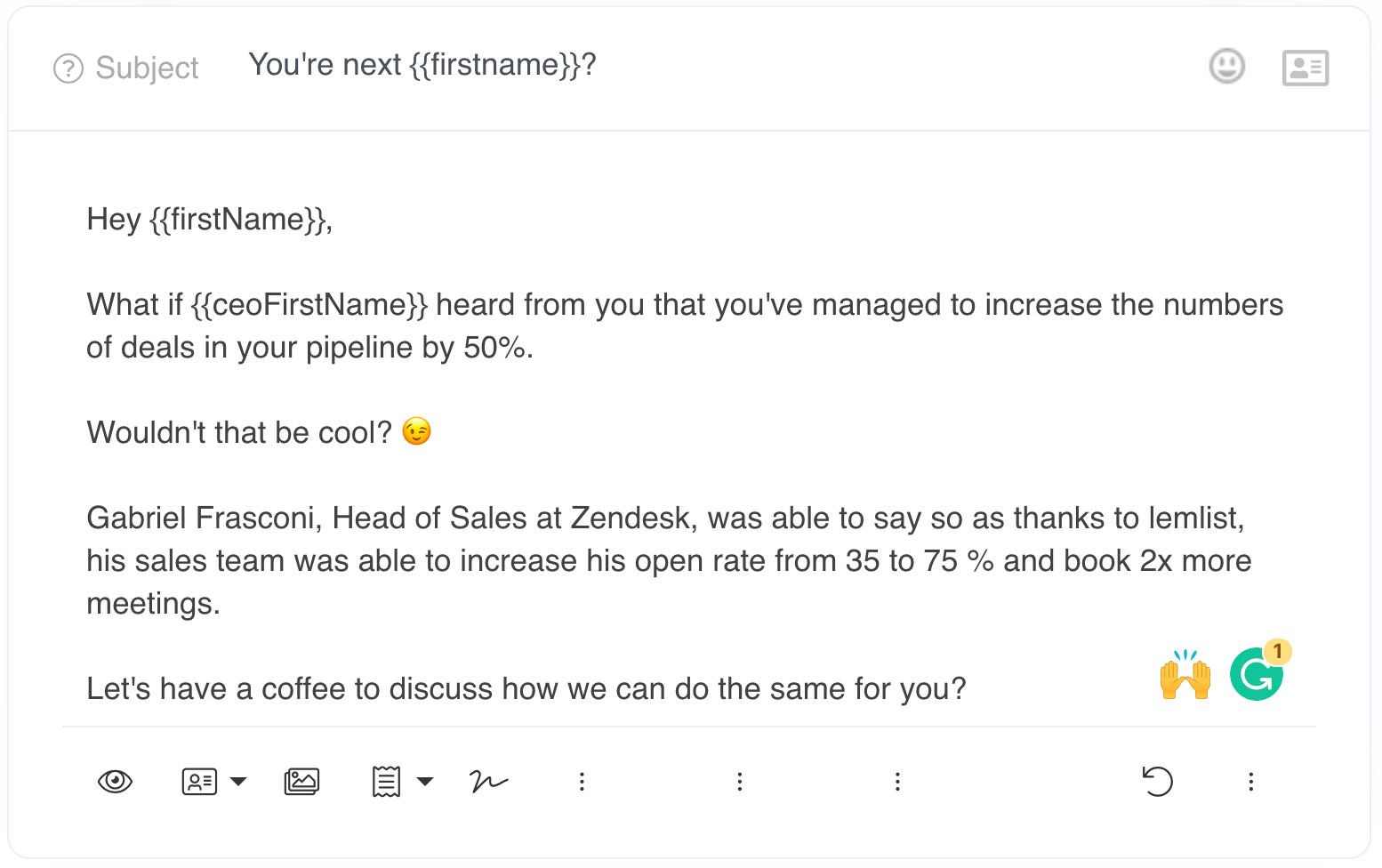
Reading the name of your CEO in an email will catch your attention, even if it comes from someone you don't know
This cold email intro line may be a bit sales-y, but you can focus it on the promised land... something really connected to your prospect and they see themselves in the future
Putting a social proof right after your intro line helps to build trust, and you'll have more chances to book a meeting
Don’t stretch the click-bait
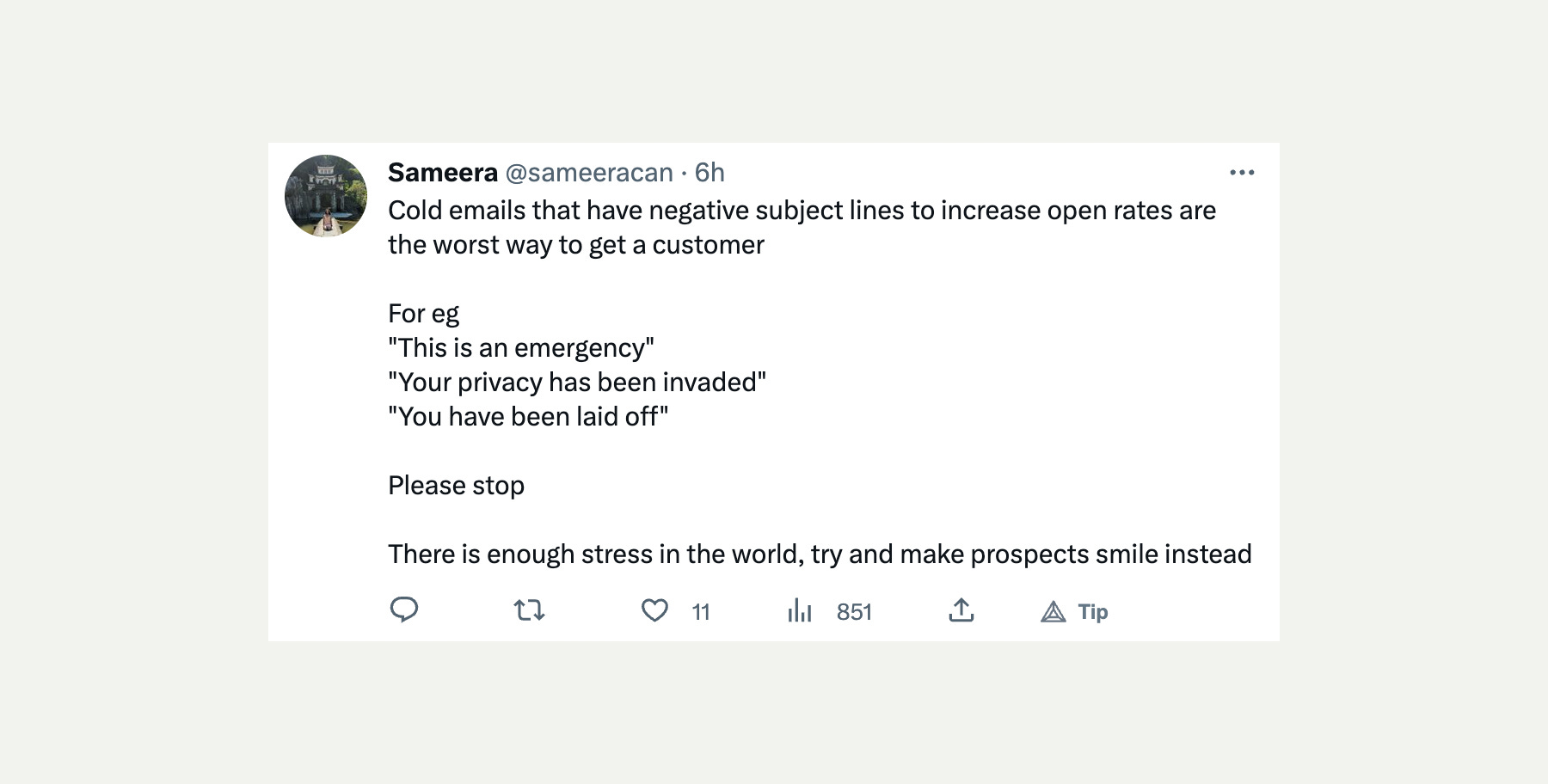
Another example from Lemlist
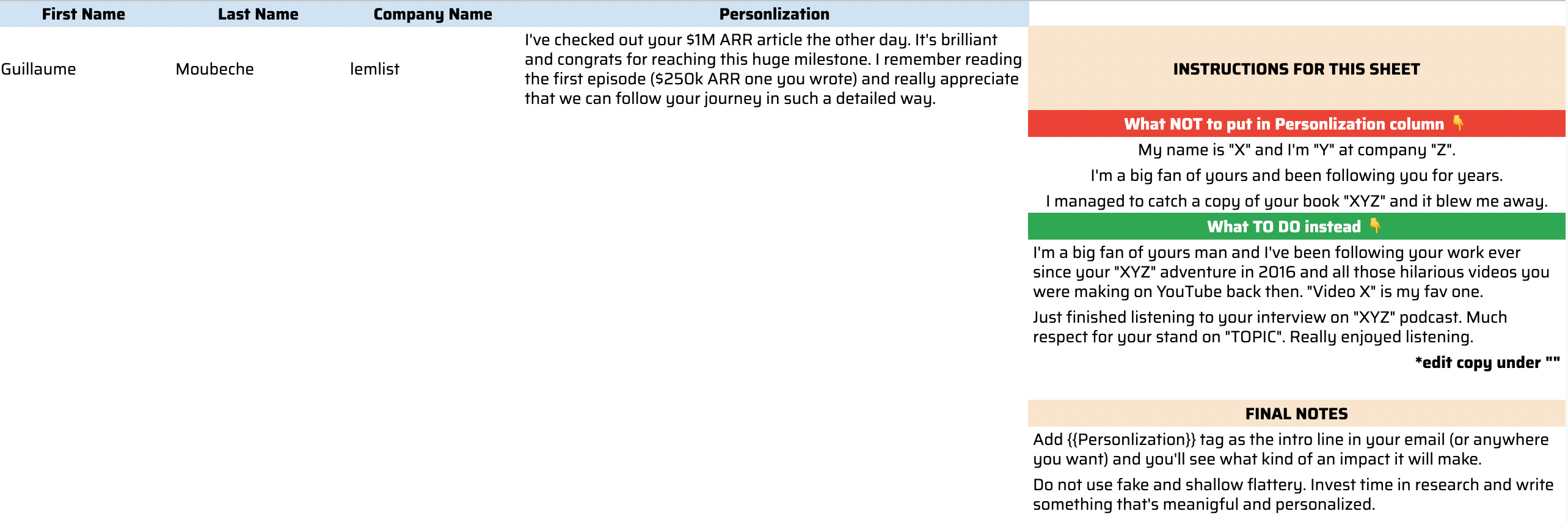
“In a scenario, imagine my ambition is to bring Scott Leese as my podcast guest. What I can do is search his name on YouTube and Google, then see what kind of podcasts has he been doing lately to make sure my offer is special.”
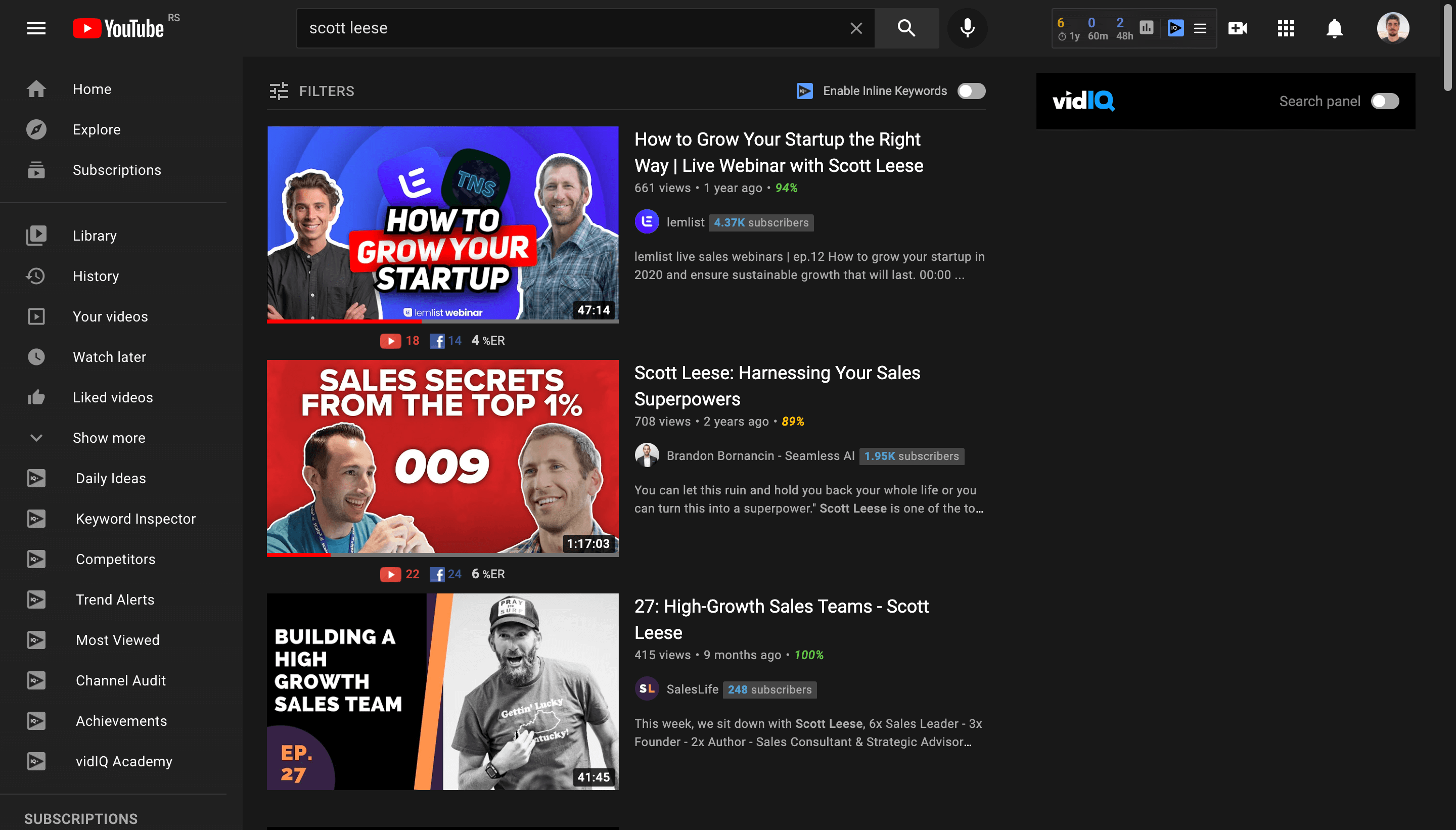
Just finished listening to your interview on “Sales Secrets From The Top 1%” podcast. Was quite interesting to hear you share how you handle sales meetings, your urgency tactic and how you navigate the conversation from there.
The rest of the email would be a topic proposition and explain what's in it for Scott if he agrees to join. Anything can be inspiration for an intro line. You can focus on the industry, company, or lead themselves. :)
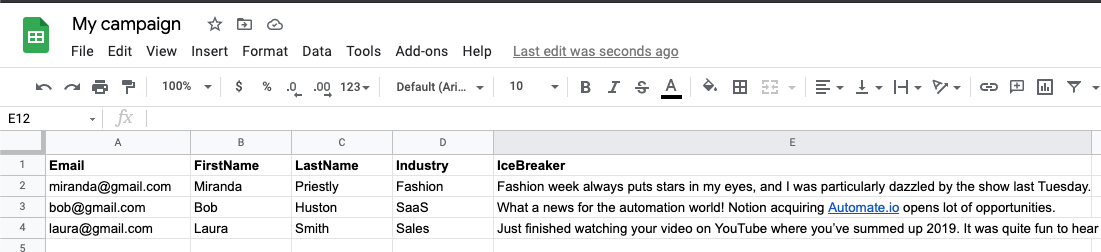
Later on, the setup is easy. You add a column in your CSV file that can be called "IceBreaker".
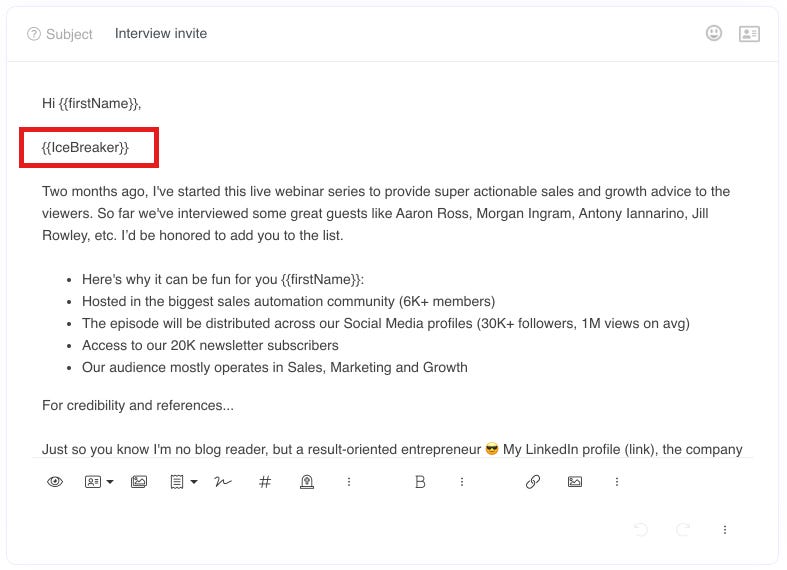
Then, add the variable {{IceBreaker}} in your email sequence.
Do’s and Don’t of starting an email
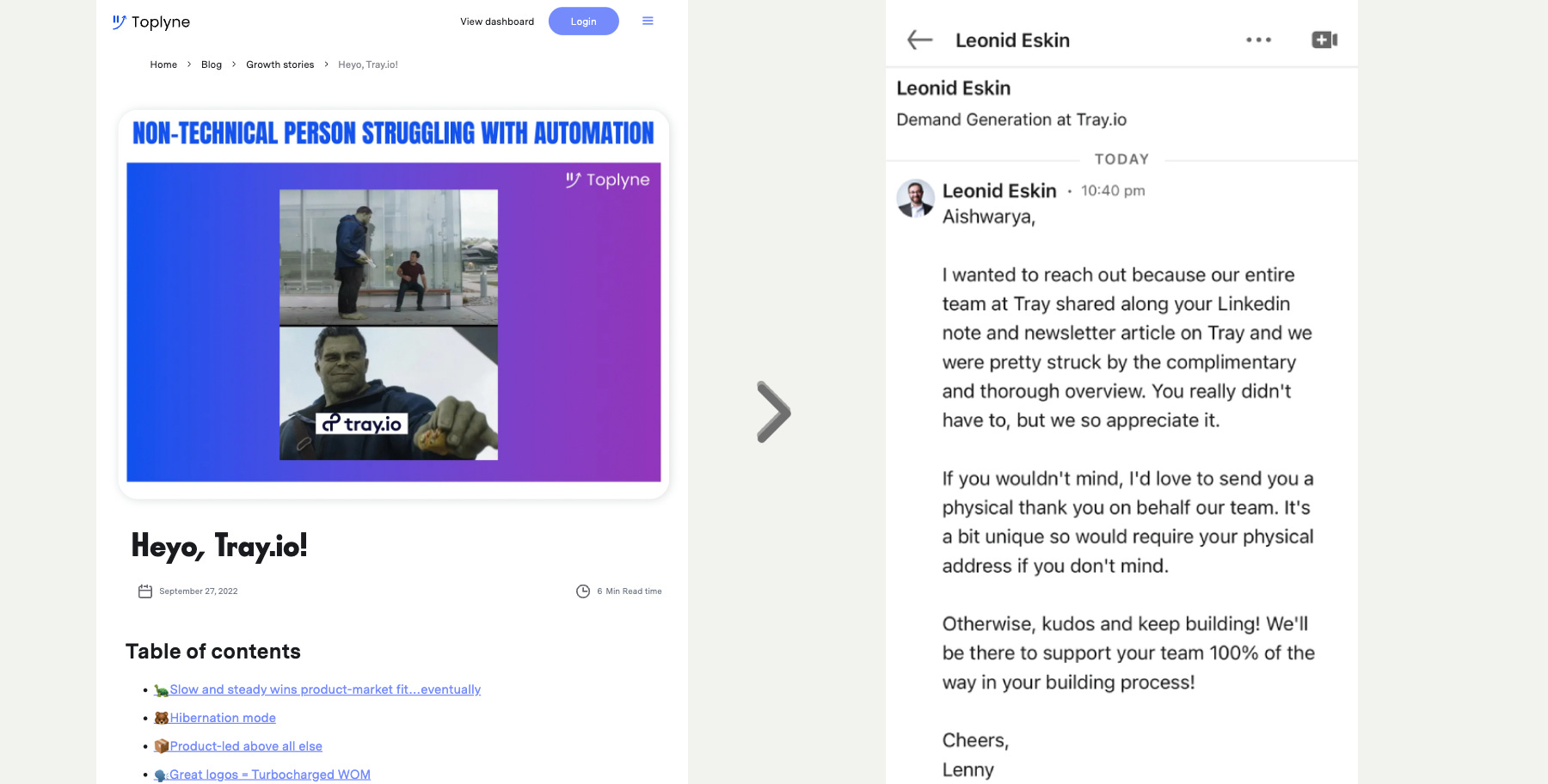
The power of persistence cannot be underestimated in cold outbound campaigns. You require atleast 5-7 touchpoints to generate a response from a lead. The continuous touchpoint across different channels, such as social media, phone calls, email with helpful and friendly content will fetch you reply. Sometimes you need a dedicated blog post or invitation for a webinar type content to get attention of prospect. Example Toplyne won a demo with Tray usin a thorough blog post on their growth strategies.
Few links
➡️ Cold call opening lines that lower the resistance
➡️ Subject lines that explode code email open rates
In the next post, we'll take a deeper dive into the world of cold outbound and explore the importance of tracking and analyzing the results of your campaigns. I'll also share some real-world examples of outbound campaign and provide insights on how you can use analytics to improve your outreach efforts. So, get ready to crunch some numbers and take your outbound game to the next level! See ya :)))